

Understanding the process of selling a house with a quitclaim deed in Houston, TX, requires examining specific property laws and the implications of the deed. A quitclaim deed facilitates the transfer of property between family members, resolves ownership disputes, and clarifies title issues. Navigating Texas property laws necessitates clarity and precision due to their significant influence on legal rights. This guide elucidates the complexities of quitclaim deeds, equipping you with the necessary knowledge to approach the sale of your property with confidence. Explore the advantages and drawbacks of utilizing a quitclaim deed, allowing you to make well-informed choices that suit your specific circumstances.
Key Highlights
- Quitclaim deeds offer a swift, informal property transfer, often used among family or for correcting titles.
- Unlike warranty deeds, quitclaim deeds do not assure a clear title, posing potential legal risks.
- In Texas, quitclaim deeds demand caution, especially as they don’t protect against existing liens or claims.
- Sellers and buyers must engage in thorough research and legal consultation to mitigate risks.
- Executing a quitclaim deed involves precise document preparation and filing with the County Clerk’s Office.

Understanding Quitclaim Deeds: A Comprehensive Guide
Understanding the various types of property deeds is critical in the fast-paced real estate industry. Quitclaim deeds serve a unique purpose in the transfer of real estate, particularly in Texas. This detailed guide examines the distinctions between quitclaim deeds and warranty deeds, as well as their uses and purposes. Understanding these concepts will help you navigate real estate transactions more effectively, whether you are a grantor, grantee, or buyer in Houston, Texas. Let us investigate the functionality of quitclaim deeds and why they may be preferred over other types of deeds.
How Quitclaim Deeds Differ from Warranty Deeds
Warranty and quitclaim deeds are two legal instruments for transferring real property title. Unlike warranty deeds, quitclaim deeds do not guarantee title. It transfers the grantor’s ownership interest to the grantee without guaranteeing good title. Quitclaim deeds are commonly used in trust-based situations, such as family relationships or informal transactions, where a thorough title search may not be necessary. Conversely, a warranty deed guarantees the grantor’s clear title and encumbrance-free protection for the grantee. In a quitclaim deed transaction, the grantor transfers ownership interest without committing to verifying the title is clear of liens or other claims. Quitclaim deeds are unsuitable for transactions involving external buyers who require confirmation of a clear title due to the lack of warranty. Unlike warranty deeds, quitclaim deeds aim to quickly transfer property without the extensive mandates. Despite not guaranteeing title, quitclaim deeds are useful for title curative actions, title disputes, and ownership adjustments without a sale. Quitclaim deeds have various legal implications for Houston, Texas, homeowners. Quitclaims convey ownership without the security of warranty deeds, according to state property laws. Texas property buyers should be aware of these distinctions to prevent unexpected issues after a transfer. Seeking legal advice before signing a quitclaim deed is strongly recommended, especially for high-value transactions, to reduce the risk of future disputes. Quitclaim deeds are best suited for quick transfers and family-related ownership changes, as they favor speed over legal protection, something Houston cash buyers and surrounding Texas cities often take into account when evaluating a property.
Common Uses for Quitclaim Deeds
Quitclaim deeds are highly valued due to their efficiency in certain property transfer scenarios. One of the most common applications for a quitclaim deed is in familial transactions, where a property owner wishes to transfer real estate ownership to a relative. This can occur for a variety of reasons, including estate planning or changes in family status (for example, marriage or divorce). Quitclaim deeds are commonly used in informal situations where parties value speed and ease of transfer over legal protection. Quitclaim deeds are also commonly used for title curative actions. These are used to correct a misspelled name on a property deed or to update it to reflect the correct title. This method is efficient because it enables the current owner to resolve issues without going through a lengthy legal process. Quitclaim deeds are frequently used to address title defects. For example, if some unspecified interest in a property is still listed in public records, a quitclaim deed may help to eliminate the uncertainty. Quitclaim deeds can also be used to quickly transfer ownership interests, such as adding or removing someone’s name from a deed. This adaptability makes them appealing for changing ownership structures without the need for a full sale or mortgage refinancing. For example, if a couple purchases a house together, they can use a quitclaim deed to add both names to the title, ensuring clear ownership interests. Understanding the practical application of quitclaim deeds in Houston, Texas, can lead to more efficient transactions. However, because quitclaim deeds do not typically include warranties, parties should understand their limitations. Before signing a quitclaim deed, consult with a property law professional to avoid misunderstandings and ensure that all legislative requirements are met. These deeds are important in property law because they provide efficiency and peace of mind by resolving ownership and interest disputes in a timely and legal manner. They should, however, only be used in an appropriate context.
Legal Implications of Selling a House with a Quitclaim Deed
Selling a house with a quitclaim deed involves a variety of legal implications that homeowners in Houston, Texas, need to be aware of. Quitclaim deeds are distinct from warranty deeds as they convey whatever interest the grantor has without guaranteeing the title’s clarity. This section will explore the potential risks and advantages of utilizing quitclaim deeds in Texas, and why homeowners must exercise caution. Understanding these implications can help protect your interests and assist in making informed decisions in property transactions.
Potential Risks and Advantages in Texas
Texas quitclaim deeds have pros and cons for real estate transfers. Quitclaim deeds are simpler and faster, allowing titles to be transferred without extensive documentation. This can be helpful in familiar situations like family transactions. Transferring a house with a quitclaim deed lacks warranty deed protection, so be careful. Quitclaim deeds do not grant title clearance from encumbrances or legal claims, leaving the grantee vulnerable to disputes. Without warranties, the new owner must deal with liens and title defects. Quitclaim deeds are good for title corrections and ownership adjustments that don’t require a full transfer or sale. They can fix deed clerical errors and update ownership details after a divorce without a lawsuit. A quitclaim deed can save time and simplify title transfer in Houston, where property laws are complex, making it suitable for internal realignment of interests or family consolidations. However, quitclaim deeds are simple, but transferring property interests without a full ownership guarantee is risky. Lack of guarantees can cause legal issues if the buyer finances purchases. Lenders need warranty deeds to ensure clear, defect-free titles. Post-transfer title disputes can be costly because the grantee cannot hold the grantor accountable for defects. In summary, quitclaim deeds are a fast, cost-effective way to transfer title, especially in familial or non-disputed situations, but they are risky. You must determine if the transaction’s goals are met without warranties. Consulting a lawyer before using a quitclaim deed can prevent issues and ensure the transfer follows Texas property laws. A quitclaim deed’s full meaning is essential to navigating Texas’s complex property markets and protecting both parties’ interests.
Why Texas Homeowners Should Exercise Caution
Houston homeowners thinking about selling a home with a quitclaim deed should be cautious due to Texas property law. State regulations recognize that quitclaim deeds transfer any interest held by the grantor, but they do not ensure title clarity. When using a quitclaim deed, exercise caution, as it may lead to unexpected legal issues. Recognizing that a quitclaim deed does not provide a clear title is critical for a smooth sale process, as lenders prefer warranty deeds that do. Uncertainty about the grantor’s interest or outstanding liens can put the grantee at risk. The lack of security provided by a warranty deed may discourage buyers from purchasing properties through a quitclaim deed, lowering the property’s marketability. Furthermore, in real estate transactions, quitclaim deeds necessitate a thorough evaluation of the ownership history. If title issues arise after conveyance, inadequate scrutiny can lead to costly legal issues. Hidden encumbrances will be transferred to the new owner, causing unexpected financial strain. Because quitclaim deeds lack protective features, any title issues must be investigated and resolved before the transfer. Reputation issues extend beyond financial concerns. Quitclaim deeds can harm relationships in family or business transactions if not fully disclosed and accompanied by legal advice. Legal experts explaining each party’s rights and responsibilities can help to build trust and speed up transactions. Consider using a quitclaim deed to protect everyone. A property attorney can explain the risks and benefits, ensuring that the transaction meets both legal requirements and the expectations of the parties involved. While quitclaim deeds are efficient and simple, they are most effective when title insurance is not required. Texas homeowners can sell their property with confidence using a quitclaim deed by carefully evaluating each aspect of the transaction and selecting a risk-reduction strategy.

Can You Sell Property with a Quit Claim Deed in Texas?
Selling property in Texas with a quitclaim deed comes with challenges that are not always immediately clear. Both buyers and sellers need to understand that a quitclaim deed only transfers whatever interest the grantor currently holds and does not guarantee a clear title. In Houston, legal factors and market conditions play a major role in how these transactions unfold, especially when dealing with cash home buyers in Pasadena and other cities in Texas. Understanding how this transfer method works can help protect your interests and support a smoother, more successful real estate transaction.
Key Considerations for Buyers and Sellers
Several factors should be taken into account when utilizing a quitclaim deed for the purchase or sale of property in Texas. The aforementioned factors have an impact on both the grantor and the grantee. It is essential to note that a quitclaim deed does not provide any warranties. A quitclaim deed does not ensure clear ownership or title security, in contrast to a warranty deed, which does provide such assurances. The buyer acknowledges and accepts any liens or claims that may be present on the property. Consequently, purchasers should proceed with utmost diligence, perform a comprehensive title search, and carefully assess any potential legal risks prior to moving forward. This safeguards their investment against potential title disputes that could emerge post-sale as a result of outstanding debts from the prior owner.
From the viewpoint of sellers or grantors, a quit claim serves as an efficient and straightforward method for transferring property rights. In Houston, Texas, this could be attractive, especially in family transactions or settlements where trust holds greater significance than formal agreements. Sellers should provide clarity regarding the quit claim process and highlight that it transfers “whatever interest” is held without guaranteeing that it is free from defects. Advance preparation with the required documentation and disclosures can ensure clarity and prevent misunderstandings.
An additional crucial factor to evaluate is its marketability. When buyers seek to confirm their ownership of a property, they often prefer warranty deeds over quitclaim deeds. This may complicate the process of selling properties that utilize quitclaim deeds within the broader real estate markets. The majority of lenders require warranty deeds to guarantee the recovery of their investment in the property. Properties sold with quitclaims may primarily attract cash buyers or individuals prepared to assume certain risks. In Houston’s diverse and competitive real estate market, sellers can develop effective strategies by transparently communicating the types and numbers of potential buyers interested in making transactions.
The property’s location also affects the implications of utilizing a quitclaim deed. Texas property laws acknowledge these transactions; however, they do not offer the same assurances as other deeds, leading to differing interpretations and applications of this type of deed across the state. In Houston, addressing these matters necessitates a comprehensive grasp of the local legal framework. Consulting with experienced property law experts can provide clarity on the different options and considerations associated with quitclaim transactions.
In Houston, Texas, buyers and sellers should carefully weigh these considerations by balancing the benefits of speed and efficiency against the risks involved. It is important to decide whether a fast ownership transfer is worth the lack of title guarantees. Working with legal counsel helps ensure compliance with Texas property law and protects both financial and ownership interests, while also clarifying how Grand House Buyers works to support a smoother transaction.
| Consideration | Seller/Grantor Insights | Ensuring a Smooth Property Transfer Process | Legal/Market Implications |
|---|---|---|---|
| No warranties of title | Easy transfer process | No title assurance | Potential title disputes |
| Often used among known parties | Suitable for transferring interest between family members | Exercise caution regarding property title | Property may be difficult to sell |
| Quick transaction | Minimal paperwork required | Risk of unknown liabilities | Transaction speed vs. security trade-off |
| May not be accepted by all lenders | Not liable for any title defects | Need for title insurance consideration | Governed by Texas property laws |
This table outlines the complexities and considerations of using quit-claim deeds in the Texas property market, emphasizing the delicate balance between the speed of transactions and the potential risks involved.
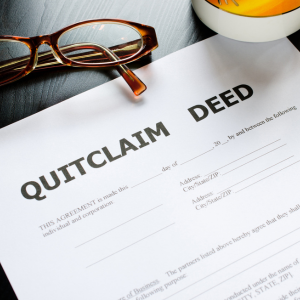
Steps to Execute a Quitclaim Deed for Selling Your Home
Selling a home with a quitclaim deed in Houston, Texas, involves several important steps. From preparing the required legal documents to completing a clean property transfer, understanding the process helps reduce common risks. Knowing how quitclaim deeds differ from warranty deeds, particularly under Texas property law, can also simplify the experience. In the sections ahead, we outline how to properly file quitclaim documents and navigate title transfers, and explain how Grand House Buyers can help ensure a smoother transition for both buyers and sellers.
Filing Your Houston, Texas, Quitclaim Documents
To effectively file quitclaim documents in Houston, Texas, you must first understand the local legal landscape and pay close attention to detail. The first step is to accurately fill out the quitclaim deed. This document should include the property address, the grantor and grantee’s names and signatures, and a detailed description of the interest being transferred. Because quitclaim deeds transfer the owner’s interest without warranty, the document’s details must be correct. Importantly, both parties should carefully read the terms to avoid future claims or disputes.
When completed, the quitclaim deed must be notarized. This legal requirement provides authenticity and formal recognition to the transaction. It is recommended that both parties to the property deed transfer attend the notarization to confirm their identities and intentions. This step confirms that the quit claim process began with integrity, laying the groundwork for the subsequent stages.
After notarization, the deed must be submitted to the Texas County Clerk’s Office. In Houston, this ensures that the quitclaim deed is recorded in public records, establishing the grantee’s claim to the property. Filing fees vary, so check ahead of time to plan accordingly. The recording of the documents formalizes the transfer of property ownership from the seller to the buyer. Proper filing not only ensures the transaction’s legality, but it also protects the grantee’s ownership interest.
Clarity between the grantor and grantee is critical throughout this process, particularly because quit claim deeds do not guarantee a clear title. While the filing procedure is simple, the seller may need to provide additional proof due to the lack of a warranty. Due diligence may include reviewing property history to ensure that no encumbrances exist on the title being transferred. Working with a real estate expert or legal advisor can help you navigate the complexities and avoid potential legal ramifications. This ensures that both parties understand the implications of Texas property laws and the distinctions between quitclaim and warranty deeds.
Ensuring a Smooth Property Transfer Process
In Houston, Texas, executing a quitclaim deed for the sale of a home involves more than just completing legal paperwork; it also requires ensuring that the transfer of property interests takes place smoothly. The transition of property ownership from the current owner to the grantee must be executed smoothly. Enhancing understanding of the complexities involved in deed transfers can reduce the likelihood of issues arising during the quitclaim filing process. Given that quit-claim deeds do not assure a title free from defects, it is essential for the parties involved to emphasize transparency and thorough communication.
Conducting a thorough background check on the property is crucial. Even in informal or trust-based transactions, a title search is recommended to uncover any existing liens or undisclosed interests. Although Texas law does not require title insurance for quitclaim deeds, obtaining one could serve as a safety net for the buyer, providing assurance in addition to the deed. This reduces the risk of title defects while also providing the new owner with peace of mind.
Before finalizing a quitclaim deed sale, any outstanding legal issues concerning the property must be addressed. This may include settling unpaid taxes, clearing liens, or resolving boundary disputes to ensure a clear ownership transfer. Proactively addressing these issues allows for a smooth transaction, which is critical under Texas property laws that emphasize clear conveyance and ownership rights.
During the process, both parties must have in-depth discussions to align expectations, especially since quitclaim deeds take a “as-is” stance for the conveyed interest. The grantor should disclose any known defects or issues, so that everyone is clear on what interest is being transferred. Such conversations strengthen mutual understanding and alleviate potential future grievances. Furthermore, detailed documentation and signed assurances can protect both the grantor and the grantee from legal challenges, fostering trust in the transaction.
Finally, the goal is to ensure that both parties are satisfied with the transfer terms, avoiding the pitfalls that come with conveyances that lack a warranty. Being forthcoming about the property’s condition and history strengthens the buyer’s trust and makes the quit claim process go more smoothly for sellers. Understanding the limitations associated with quitclaim deeds prepares buyers for any future legal issues that may arise. Professional assistance from Houston property lawyers can be invaluable in verifying legal responsibilities and ensuring that the transaction is in accordance with state laws. Such strategic approaches ensure a smooth transition and reinforce the property transfer’s integrity.
FAQs:
What is a quitclaim deed, and when is it typically used?
A quitclaim deed is a legal instrument used to transfer the grantor’s interest in a property to a grantee without guaranteeing the title’s clarity. It is commonly used in familial transactions, to correct titles, or to settle ownership disputes due to its simplicity and speed.
What are the risks of using a quitclaim deed in Texas?
In Texas, quitclaim deeds do not assure a clear title and do not protect against existing liens or claims. This can lead to legal challenges or financial burdens if the grantee discovers title defects post-transfer.
How do quitclaim deeds differ from warranty deeds?
Quitclaim deeds transfer whatever interest the grantor holds without any warranty, while warranty deeds assure the grantee of a clear, defect-free title. Warranty deeds provide more security to the buyer than quitclaim deeds.
What is the process for filing a quitclaim deed in Houston, Texas?
Filing a quitclaim deed involves preparing the document with accurate details and having it notarized. It must then be filed with the County Clerk’s Office. Proper filing establishes the grantee’s claim over the property.
Is it necessary to conduct a title search before using a quitclaim deed?
While not legally required, conducting a title search is highly recommended to uncover any existing liens or encumbrances on the property, ensuring the buyer is aware of any potential issues with the title.
Helpful Houston, TX Blog Articles
- How to Sell a House Without a Realtor in Houston, TX
- How to Sell a House in Foreclosure in Houston, TX
- Guide to Selling a Probate House in Houston, Texas
- What Home Improvements Matter Most Before Selling in Houston, TX
- Tax Implications of Selling a Home in Houston, TX
- How Does Selling a House With a Mortgage Work in Houston, TX?
- Can I Sell a House with a Quitclaim Deed in Houston, TX?
- Can You Sell a House With a Lien in Houston, TX?